Custom Search

Mustaqbil

Sunday, March 28, 2010

How to Grow Cherries

Sweet cherries are great for eating fresh, while tart ones are best for baking. Both can successfully be grown in many parts of the country.

Step 1: Purchase Cherry Trees


The two basic types of cherries are sweet and tart. Sweet cherries are great for eating fresh, while the tart ones are best for baking. To produce fruit, most cherries require another tree nearby for cross-pollination. Tart cherry trees are adaptable to a broader range of climates than sweet cherries. Popular sweet varieties include Black Tartarian and Stella. Popular tart varieties include Balaton and Montmorency.

Tip: As a general rule, sweet cherries grow best in zones 5 through 7, while tart cherries do best in zones 4 through 9.

Step 2: Prepare the Site

Cherry trees need at least six hours of full sun a day in order to produce fruit. Cherries also need good soil drainage in order to thrive. If the site is heavy with clay, amend it with plenty of organic compost and organic soil conditioners before planting. Tart cherries are more adaptable to a wider range of soils.

Step 3: Plant the Trees

Many cherries are sold as bare-root trees. Shake off any material clinging to the roots and soak the roots in a bucket of water for two hours before planting. Dig a hole the same depth and width as the roots. Place the tree in the hole and fan out the roots. Position the tree in the hole so that the graft union is 3" above the soil level. Backfill with soil until the hole is three-quarters full. Water well to settle the soil. Finish filling the hole and water again.

Step 4: Water, Feed and Cultivate the Trees

In the first year or two after being planted, cherry trees require regular watering. A layer of light mulch underneath the trees will help conserve water and keep down weeds. A common recommendation is to fertilize cherry trees in early spring with a low-nitrogen fertilizer such as 5-10-10. In many areas of the country, insecticides and fungicides may be required for good harvests.

Step 5: Prune the Trees

The primary reasons for pruning are to encourage a tree to be more fruitful and to open up the tree so that the sunshine can reach most of the branches. The best time to prune any cherry is late winter or early spring. Your local cooperative extension service should have a free brochure on how to prune cherry trees.

Step 6: Protect the Blossoms From Late Frost

Cherry blossoms must be protected from spring frost damage, which can wipe out a year’s crop. If a late frost is predicted after fruit-bud set, place lightweight fabric over the tree to form a tent. Add a small heat source such as a light bulb on an extension cord.

Step 7: Protect the Fruit From Birds

Birds love cherries. As soon as the fruit begins to ripen, cover the trees with bird netting to protect the fruit. Make sure there are no gaps or openings in the netting. Secure the netting to the ground with bricks, stones or other weights.

Step 8: Harvest the Cherries

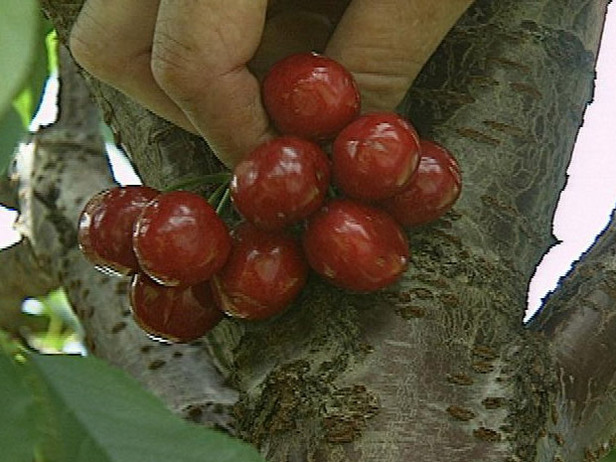
Cherries are among the earliest ripening fruits, being ready to harvest in late spring or early summer. Cherries increase in size until they're ripe. Sweet cherries become firm when ripe. Ripe cherries pull easily off the tree. Sweet cherries are typically picked stem and all. Tart cherries are usually picked without their stems.

Pruning Apple Trees

Fruit trees must be pruned every year, usually during the dormant period. If you don't begin proper pruning early in the tree's life, the result is "alternate bearing," which means that one year's harvest is bountiful while the following year's is puny.


Apple trees are the most common fruit trees home gardeners choose to grow. Pruning is necessary in order to open up the tree canopy to sunlight and air circulation and promote fruit production and a healthy plant. Follow these tips to pruning your apple tree so you can reap a bountiful harvest year after year.

The Ideal Time to Prune Apple Trees

Apple trees should be pruned in late winter, but you can prune into the spring and summer if you must. Avoid pruning in the fall since this stimulates new growth at the same time the tree should be getting ready for winter. The new growth may not have a chance to harden off before cold temperatures and frost hit, which may lead to cold damage on the tree.

Pruning Tools

It's important to have the right tools for the job. Keep the following tools handy for when you prune:

Hand pruners. Use this tool to remove small branches and twigs. You'll probably use this tool the most, so keep them sharp and handy.

Loppers. Loppers have long handles and provide more leverage when pruning larger branches. They're typically used to prune branches larger than the width of your thumb, or about 1" diameter or more.

Folding saw. This tool is useful when pruning limbs larger than 3" in diameter.

Pole pruners. These consist of a blade attached to a long pole and are handy for reaching high branches.

Pruning

The first rule of pruning is to remove any dead, injured or diseased branches. When going to make a cut, look for the branch collar, which is the "wrinkled" part near the base where the branch is connected to the tree trunk. This portion of the tree has all the cells necessary to heal wounds. Never cut into the branch collar when pruning. Instead, make the cut just above the point where the branch collar flares.

During the first couple of years after planting, allow the tree to grow its roots and establish itself before doing any pruning. It's good to prune away dead, injured or diseased branches immediately after planting up to the third year.

Begin heavier pruning in the third year of growth. First, remove any dead, injured or diseased branches. Then moving up the tree, look for branch angles, or scaffolding branches which are branches that grow from the main trunk, preferably evenly spaced, at 45- or 50-degree angles. Leave these scaffolding branches for the basic framework of your tree.

Fruiting buds are dark-colored, wrinkled wood that grows from scaffolding branches. Leave these small branches since they're the ones that produce fruit. Trees begin to form fruiting buds at around three years of age.

Vegetative buds are similar in appearance to fruiting buds, but they're not so wrinkled and dark. These buds form leaves and new branches.

Remove any competing branches that will cause problems for the tree. Sometimes these branches create a hollow where water can collect and encourage rot. Look for branches growing toward the inside of the tree, and remove them to improve air circulation. When you remove a branch or a limb, the bud directly under the cut will take over and grow. For this reason, you should cut above outward-facing buds.

A fruit tree should have only one central leading branch. Don't allow two leader branches to form, or the tree will become weak. Identify the healthier or stronger leader, and remove the other. The ideal apple tree has one central leader surrounded by evenly spaced scaffolding branches that have plenty of fruiting spurs.

Tip: If your apple tree is lacking the scaffolding branches, or the lower branches that are actually good on an apple tree, you can force them to come out. Find a bud and use a knife to make a nick a millimeter above and below it. Then cut the notch between the nicks completely out, making sure to cut through the bark and the green layer beneath it. That will force the tree to grow a new branch on the spot.

Thinning Fruit

During seasons of good weather, the apple tree may produce an overabundance of fruit, causing fruit "crowding" on the branches and resulting in smaller-sized apples. In order to grow tasty, normal-sized apples, it may be necessary to thin out the fruit. Generally speaking, fruit should be spaced about 6 inches apart along the branches; thin out closely grown apples and select out the smaller-sized ones in favor of the larger fruits.

Growing Citrus Trees

Regardless of whether your climate is tropical or wintry, learn how to grow your own citrus trees at home.

Citrus plants offer a wide array of juicy fruit, including oranges, lemons and grapefruits. You can grow your own right at home, even if you live in a colder climate. Here are some helpful tips for growing these tasty trees.


Freeze Protection

All citrus fruits are warm-weather plants that need protection from frost in cold-winter areas. If frost is predicted, move them inside if you live in a climate with prolonged cold temperatures and freezes. In milder climates further south, protect citrus trees from frost by using a floating row cover made from light landscape fabric. You can also use a bedsheet, piece of burlap or even newspaper. Provide some sort of support to prevent the covering from resting directly on the leaves, or they may freeze to the cover and become damaged in spite of your efforts. For small trees, an inverted tomato cage works well for support. For larger trees, use bamboo stakes. Use bricks to keep the wind from blowing away the covers.

Feeding Citrus Trees

Use a fertilizer formulated especially for citrus, as these plants have special requirements and prefer nitrogen and phosphorus. Follow the directions on the label exactly. If you live in a frost-prone area, fertilize after the last spring frost and stop fertilizing altogether by late summer. In rainy areas nutrients leach out of soil more quickly, so frequent smaller feedings are appropriate. Citrus plants may drop flowers if they're getting excess nitrogen.

Citrus Tree Maintenance

Citrus trees require a rich, fast-draining soil. Keep the soil moist but not wet at all times. Use a three-inch layer of mulch to cover the soil surface to prevent moisture loss. If your plants have yellow leaves, check for scale insects, which look like bumps on the stems and scrape off easily with your fingernail. If you find scale, use an insecticidal soap for control.

Growing Citrus in Containers

If you'd like to grow citrus trees but live in an area where they won't overwinter, why not grow them in pots? You can bring them indoors when it's cold and move them outside during warmer temperatures. To grow a citrus plant in a pot, choose a dwarf variety. Place a layer of rich, fast-draining potting soil in the bottom of the pot. Set the tree in place, and check the top of the root ball for correct planting depth. The top of the root ball should be two to three inches below the rim of the pot. Fill the pot with potting soil, firming gently. Apply a light layer of soil on top of the root ball. Move the potted tree to a location in the warmest, sunniest part of the garden, and water well. At the threat of frost, move the pot to a warm, sunny location indoors.

How to Build a Garden Storage Bench

Step 1: Create Two Sides


Use a circular saw to cut four 2x6 boards to lengths of 16 inches. Cut two 2x4 boards to lengths of 16 inches. Cut four pieces of 4x4 to lengths of 14 inches. To form each side, sandwich one of the 2x4 boards between two of the 2x6 boards. Position the 4x4 posts at both ends, laying them perpendicular to the boards. Secure with 3-inch galvanized deck screws.

Step 2: Create the Front and the Back

Use a circular saw to cut four 2x6 boards to lengths of 5 feet. Cut two 2x4 boards to lengths of 5 feet. Arrange the boards in the same fashion as with the sides, by sandwiching the 2x4 boards between the 2x6 boards. Attach the boards with 3-inch galvanized deck screws to the 4x4 posts on the side panels.

Step 3: Create the Seat

Use a circular saw to cut three 2x6 boards to lengths of 5 feet-6 inches. The seat will extend over the sides by a few inches. Cut two 2x6 boards to lengths of 10 inches. These are used to hold the seat boards together. Lay the boards side by side lengthwise. Position the 10-inch cleats across the boards near the ends. Be sure to center them so they fit inside the bench box. Secure with 3-inch galvanized deck screws.

Use Annuals to Add Garden Color

Annuals can add a burst of color to your garden wherever you need it -- whether your garden is an extensive country plot or a set of containers on a city balcony.

Tuberous begonias are tender perennials typically grown as annuals. The upright forms make wonderful bedding plants; the pendulous ones look magnificent in hanging pots. The tubers should be planted in spring in rich soil or potting medium, with the concave side up and just the bottom half of the tuber buried. Once growth begins, apply 22-14-14 fertilizer every three weeks until flower buds begin to form. At that time, switch to 0-10-10 fertilizer, applied on the same schedule. Pick off flowers as they fade. When the plants begin to turn yellow in fall, withhold water. When the tops are completely dry, dig the tubers from the soil, and remove the tops. Dry them in the sun for a few days, then dust the tubers with sulfur powder or another fungicide to prevent rot. Store in paper containers in a cool, dry, dark place until planting time in spring.


Semperflorens begonias (also called wax begonias and fibrous begonias) are excellent bedding plants grown as annuals. In mild climates they may be overwintered. These free-flowering plants require little or no deadheading. Grow them in partial shade or indirect bright light, and provide regular doses of fertilizer.

Impatiens walleriana (busy Lizzie), a subshrubby perennial usually grown as an annual, requires filtered light or shade and a fast-draining soil rich in organic matter. If you plant from nursery six-packs, loosen the root ball gently, then place each plant in fresh potting soil, making sure you don't bury the crown of the plant. Water well after planting, then wait for the top 2" of soil to dry before watering again. Apply no fertilizer until plants begin to grow, then fertilize every two weeks with 0-10-10. Impatiens make good container or bedding plants.

New Guinea impatiens, a specific group of hybrids, are prized for their often dramatic foliage and bright flowers. They may be grown in sunny spots, unlike Impatiens walleriana.

Snapdragons (Antirrhinum majus) are short-lived perennials usually grown as annuals. They require full sun and well-drained soil. In mild-winter areas snapdragons may be grown as a winter annual. Snapdragons are susceptible to rust, a fungus disease. To help prevent the disease, avoid overhead watering.

Most Pelargoniums, or geraniums, are perennials grown as annuals in cold-winter climates. Most prefer full sun, but in hot climates afternoon shade is appreciated. Keep plants on the dry side. Pelargoniums perform best in areas with warm, dry days and cool nights. They may be grown outdoors year-round in mild California climates. Elsewhere they're popular bedding, container or indoor plants. Move plants indoors before cold weather begins, or take cuttings for next year. For best results indoors, set near a sunny window. Pelargoniums require rich, fast-draining soil and frequent pinching back to keep plants bushy. They are subject to infestation of white fly, spider mites and geranium bud worm. Fertilize during active growth to increase flower production.

Marigolds (Tagetes) are easy, dependable annuals that require full sun and well-drained soil. Many types are available, ranging in size from a few inches to a few feet in height. Marigolds come in white, yellow, red, orange and combinations of those colors. Many believe that marigolds help repel insect pests, so they're often planted in and around vegetable patches.

Scarlet sage (Salvia splendens) is a perennial typically grown as an annual. Red cultivars should be grown in full sun; pastel varieties need a little shade. Keep plants deadheaded for continuous summer bloom.

Saturday, March 20, 2010

Top 10 Rules for Growing Veggies and Fruits


Find the sun. Most vegetables want six hours of direct sun a day — and more if they can get it. Exceptions include lettuce and radishes, which can get by with less.


Start small. If you're beginning your first garden, help yourself avoid the feeling of being overwhelmed with weeding and general maintenance. You can grow a surprising amount of food in a bed just 10-foot square.


Build up your soil. The foundation of a healthy, productive garden is a rich, well-draining, crumbly soil that has good tilth. Liberally add organic matter such as finished compost, bagged humus and straw.


Time your crops. Soil temperatures matter as much as air temperature when you're planting. Even peas, which are spring crops that are resistant to light frost once they're growing, won't germinate when the soil is below 39 degrees.


Be ready to supply cover if a late frost hits. Here, early-spring veggies grow under plastic.


Mulch, mulch, mulch. You wouldn't think twice about mulching your ornamental beds, so do the same with your veggie and fruit plantings. Keeping a layer of organic mulch over this radicchio's shallow roots helps conserve moisture and suppress weeds.


Anticipate animals pests. To a raccoon these young corn plants mean dinner in the making, once the ears are fully developed. Talk to your neighbors and try to learn what pests to expect in your area. With the right kind of fencing, you can deter raccoons, rabbits, groundhogs, deer, dogs and other unwelcome visitors.


Mingle your plants. Too much of the same kind of plant in a grouping sends "eat here" messages to bad bugs. Here, squash, peppers and beans share the space.


Stay on top of the harvest. Pick produce when it's ready. Removing beans as they mature allows more of the plant's energy to go into supporting the later fruit that forms.


You don't have to hide your vegetable garden. Where you can, find a way to integrate your fruit and veggie garden with an area of your yard where you tend to hang out. When the crops are close at hand, you're much more likely to pluck off a bad bug or give a thirsty plant a drink.

Thursday, March 18, 2010

How to Care for a New Tree

Step 1: Evaluate the Yard


Learn the mature size of the tree before you get started planting. It's one of the most common mistakes gardeners make, and the result is a tree that runs into power lines or that grows too big for its space and needs to be pruned every year. Too much pruning leads to stubs and stubs lead to rot and the rot leads to the death of some vertical limbs. Make sure you know the conditions your tree needs to grow so it can thrive. For example, a tree that needs a lot of moisture will not do well in a dry climate. Determine what you want the tree to do for your landscape. Different trees offer different things from the wow factor of cool bark to the shade from a standard maple. Choose between deciduous and evergreen. This is especially important if you are planting for privacy. You don't want to be surprised when your tree selection turns barren each winter. Different is good! Don't plant the same tree that everybody else in the neighborhood has. Not only is planting the same tree boring but it can also lead to trouble. For example, Dutch Elm Disease has wiped out trees in neighborhood after neighborhood over the last 50 years. When one tree gets sick they all get sick.

Step 2: Follow These Tree-Buying Guidelines

Trees will generally be the most expensive plants on your landscape shopping list. To get your money's worth, buy a good, healthy tree. Check out the leaves. You want a tree with healthy foliage. A few insect-damaged leaves is not a problem, and if you find a tree with some yellowing leaves, that's not a problem either as long as it's limited to about 10-percent of the foliage. Check the leaves for chlorosis, lack of vigor or a lack of new growth. Next, check the trunk of the tree. It should be straight. The bark should be unblemished. Cracks or soft spots can indicate frost or fungal damage. Check the rootball. If it's a balled and burlapped tree, dig down below the soil line to determine the depth it grew in the nursery and check for any girdling rope or wire that can "strangle" a tree. If it's in a container, shake the container gently to see if it's well-rooted.

Step 3: Plant the Tree

You can dig a hole yourself or use an auger. An auger is a machine that has a big motor and a big drill that goes into the ground. If you have a lot of trees or a big hole to dig, an auger, even though it cost $200 or so to rent for a day, is a real time saver. First, cut the container before putting the tree in the hole. Then, don't be afraid to roll the tree on its side to make planting easier. Then, gently lower the tree into the hole and watch to make sure it's centered and not crooked. If you can, get a couple people to help if you're planting a bigger tree. It's important to remember to grab the trunk not the limbs. Don't rush the process. Get the tree right before adding any more soil. After the tree is in the ground, make sure to build a berm around the tree. The raised area of soil directs rainwater down to the root system of the tree where it really needs it for the first year or so. A berm is a narrow ledge typically at the top or bottom of a slope — a mound of earth or sand. Finally, add mulch. Mulch conserves moisture in the soil. A new tree needs a lot of moisture in order to establish itself. A berm also keeps lawnmowers from rolling into the trunk of the tree and damaging that plant you just put in the ground.

Step 4: Water the Tree

There are several tools to help water a tree. A tree ring drips water right around the trunk of the tree, right down to the root ball. It's really easy to use with a water hose. If you don't have a water hose nearby, you might want to use something different this is called a tree gator. A tree gator is just a big bag that is filled full of water and drips down to the root system of the tree. It holds about 14 gallons of water. You fill it up every couple of days and it waters the tree very nicely.